First, safety
- Stay off the roof until wind, lightning and rain have passed and there's daylight.
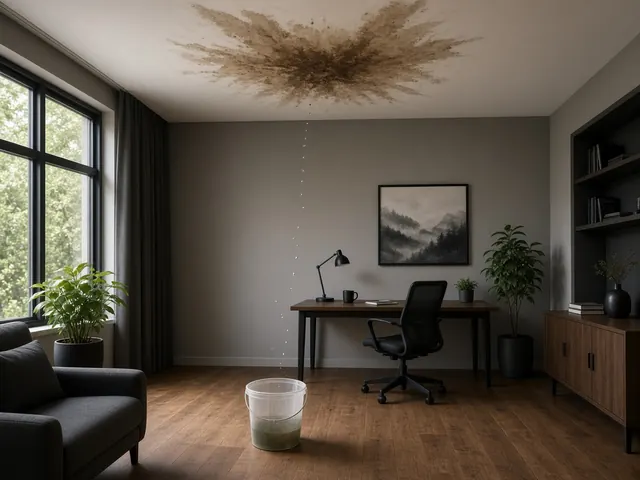
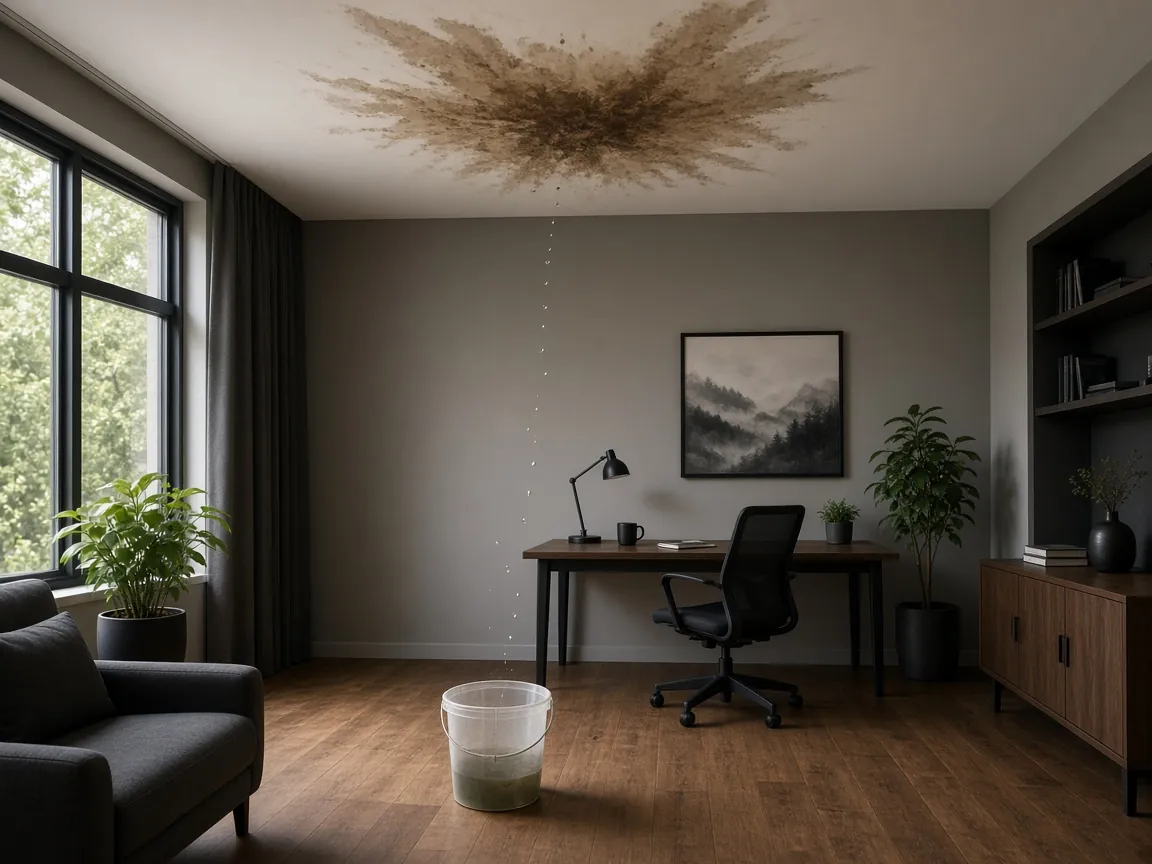
- Keep away from sagging, water-filled ceilings, which can collapse suddenly. Puncturing a bulge under controlled conditions, with a bucket ready, is something many restoration pros do, but only if it's safe to stand there.
- Shut off power to wet circuits at the breaker if you can do so safely. If the panel itself is wet, keep away and call an electrician.
- If you see structural deflection, a roof that visibly dips, leave that area and call a professional.
Emergency dry-in options
| Situation | Typical emergency measure |
|---|---|
| Small puncture or tear | Compatible tape or a temporary patch, later replaced with a permanent repair |
| Membrane peeled back at an edge | Membrane laid back and weighted or temporarily fastened; edge metal secured |
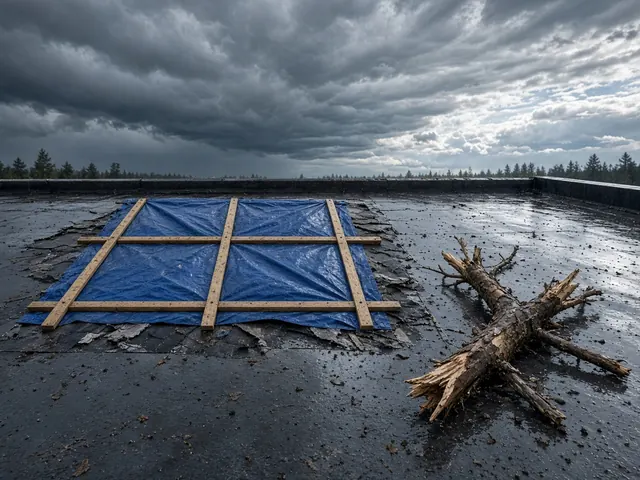
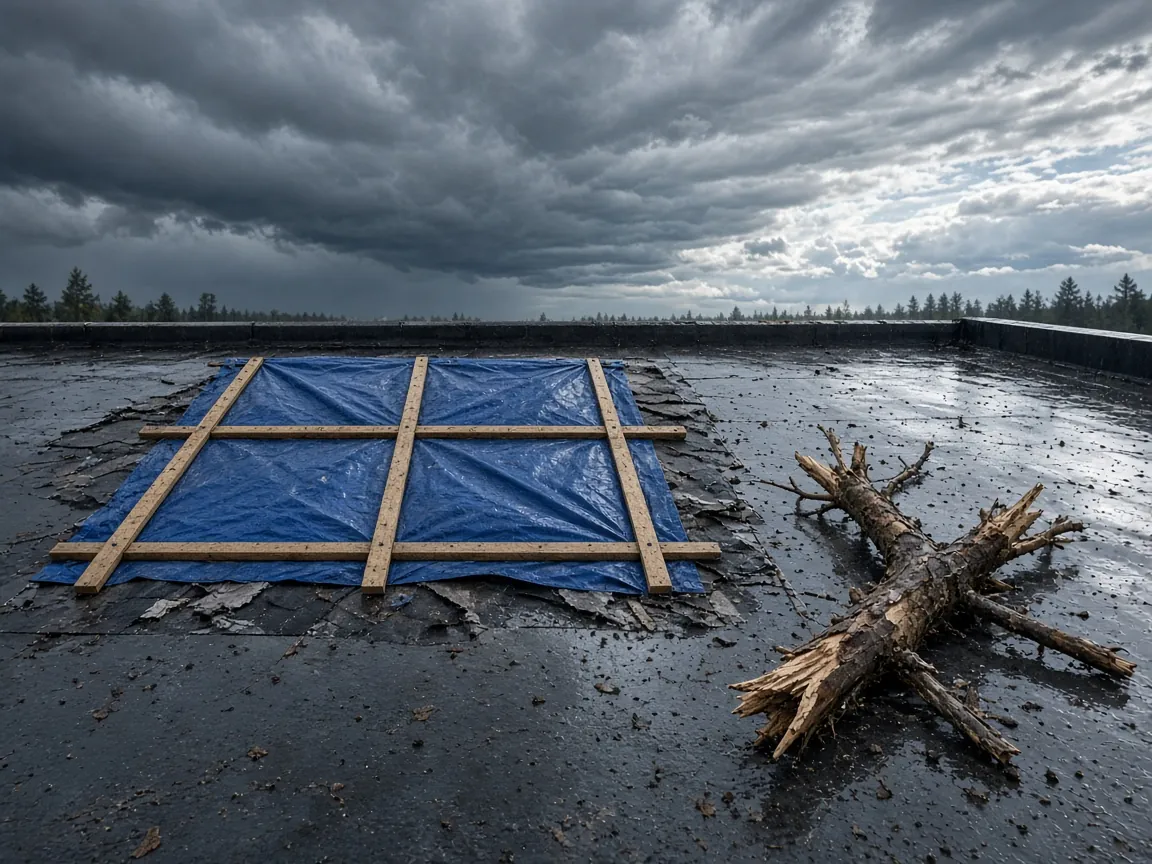
| Large area damaged | Heavy tarp secured with battens and ballast, never with nails through good membrane |
| Fallen limb | Limb removed by a tree service, deck checked for damage before patching |
Document everything for insurance
Photograph the damage outside (when safe) and inside, keep receipts for emergency work, and note dates and times. Most policies expect you to take reasonable steps to prevent further damage, so emergency dry-in is usually part of the claim. Read more in our storm damage and insurance guide.
What emergency service costs
Expect a premium for nights, weekends and active-leak response. Trade sources commonly quote 25–50% above daytime rates, and large tarping jobs are priced by area. Ask for the emergency work and the permanent repair to be quoted separately.
Frequently asked questions
Can a roofer repair a flat roof in the rain?
Permanent repairs need a clean, dry surface. Welding, priming and adhesives all fail on wet membrane. Emergency measures can go on in poor weather if it's safe; the permanent fix waits for a dry window.
How fast should a temporary repair be replaced?
As soon as weather allows, ideally within days or a few weeks. Temporary materials are not designed to last, and water can keep spreading under them.