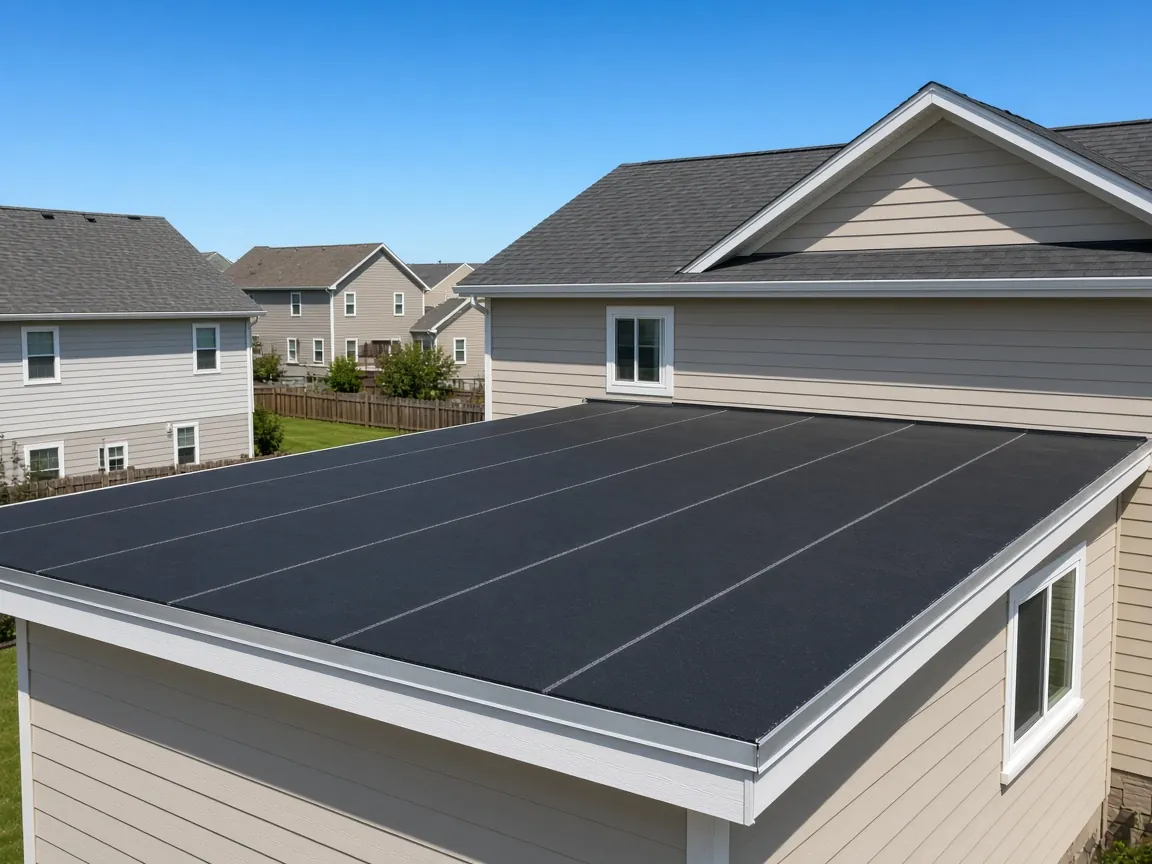
Ethylene propylene diene monomer (EPDM) rubber has been used on low-slope roofs for decades. It's common on homes, garages and commercial buildings, especially in colder climates. The membrane itself often outlasts the seam adhesives and tapes that hold it together.
Common EPDM problems
- Seam tape or adhesive releasing at laps, especially on older roofs
- Shrinkage that pulls flashing away from walls and curbs ("tenting" at corners)
- Punctures from foot traffic, debris and hail
- Failed pipe boots and pitch pockets
- Wrinkles and bridging at the perimeter
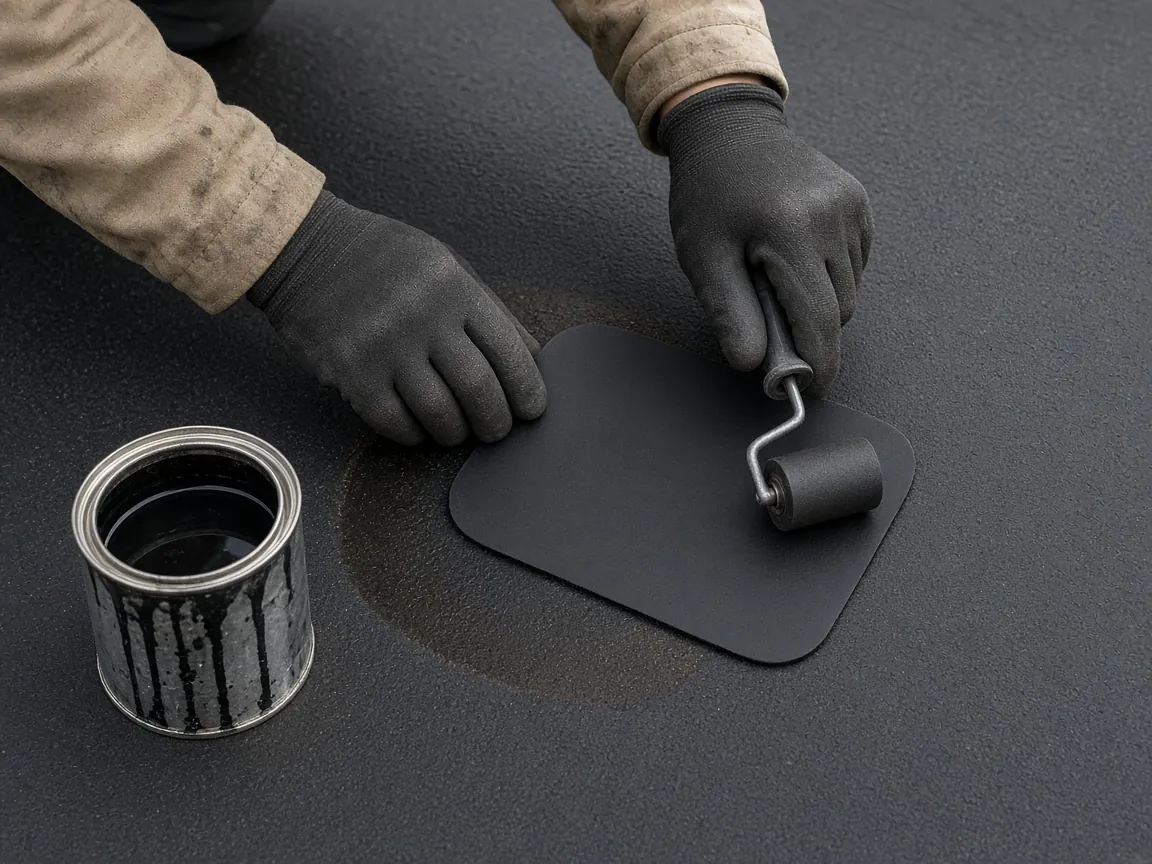
How a proper EPDM repair is done
- Clean the membrane thoroughly. Dirt and oxidized rubber prevent adhesion.
- Prime both the roof and the patch area with an EPDM-compatible primer and let it flash off.
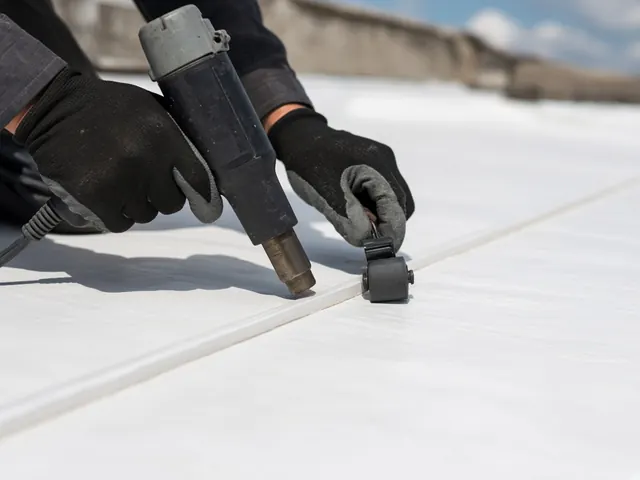
- Apply a cover patch of peel-and-stick EPDM or membrane with seam tape, rounded corners, extending several inches past the damage.
- Roll firmly toward the edges to remove air.
- Seal edges with lap sealant where the manufacturer calls for it.
EPDM repair costs
| Repair | Typical range |
|---|---|
| Small EPDM patch | $150–$400 (HomeGuide) |
| Seam repair or cover strip | Priced per linear foot; trade sources commonly quote about $6–$18/ft |
| Full EPDM replacement | About $4–$10 per sq ft installed (HomeGuide) |
About our numbers: price ranges on this site are national planning figures drawn from published 2025–2026 cost guides (mainly HomeGuide) and trade sources, rounded for readability. They are illustrative, not quotes. Local labor rates, access, roof height, insulation condition and permit rules can move a real price well outside them.
Frequently asked questions
Can I patch an EPDM roof myself?
Small punctures on a single-story roof can be patched with an EPDM repair kit if you follow the cleaning and priming steps and work safely. Anything at a seam, wall or penetration is better left to a pro.
Can EPDM be coated?
Yes. Some EPDM roofs are restored with compatible coatings, often after seams are reinforced. See roof coatings.