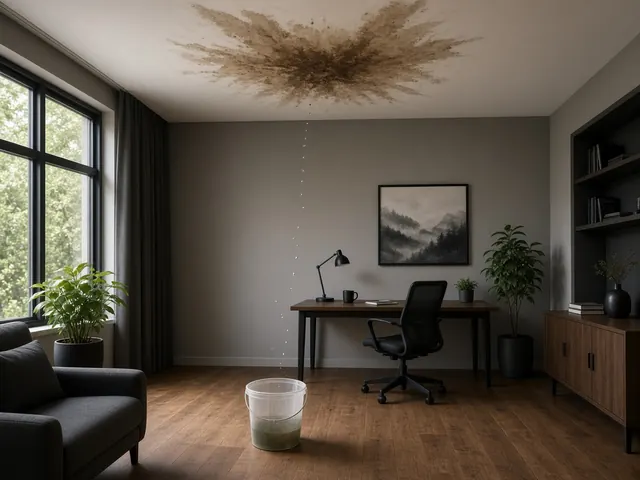
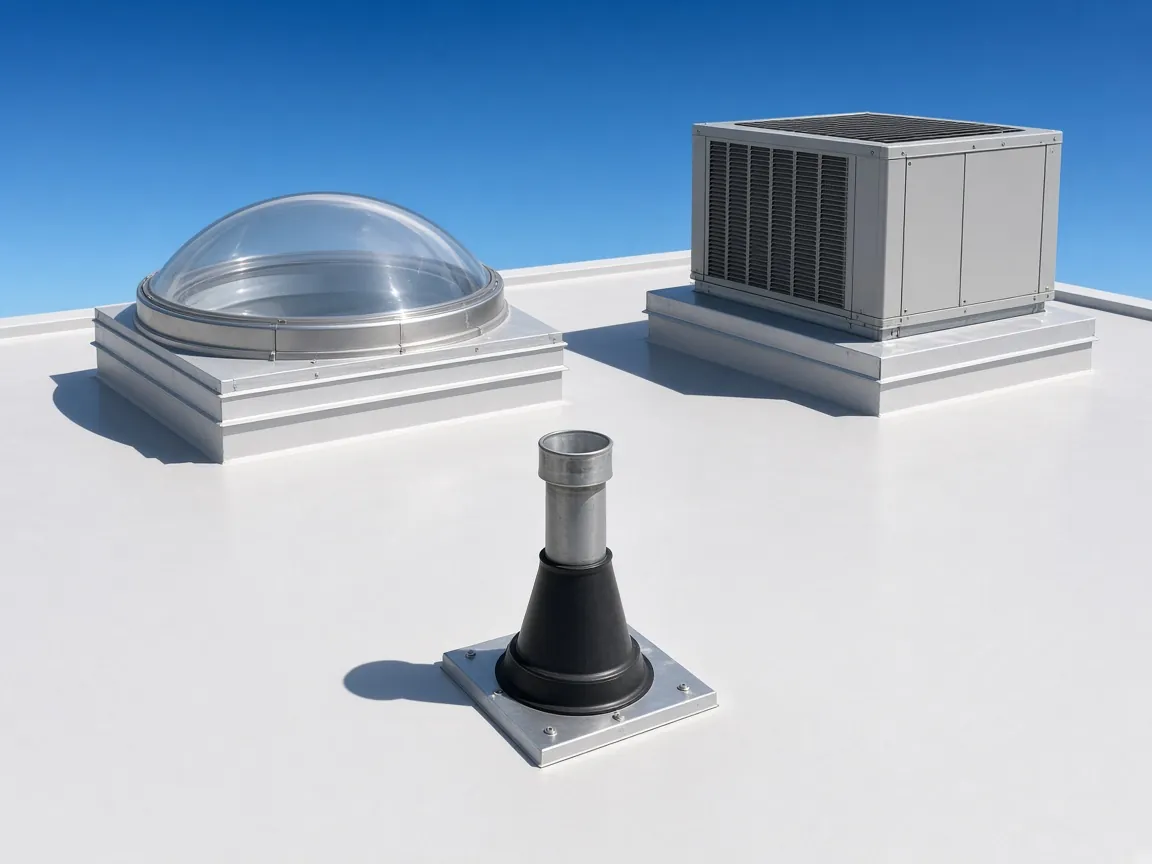
Flashing is the membrane and metal that seals the roof where it meets something else: a parapet wall, an HVAC curb, a pipe, a skylight, a drain or the roof edge. These details move, take UV and get stepped on. Industry experience consistently points to them as the source of most low-slope leaks.
Flashing types and failure modes
| Detail | How it fails | Repair |
|---|---|---|
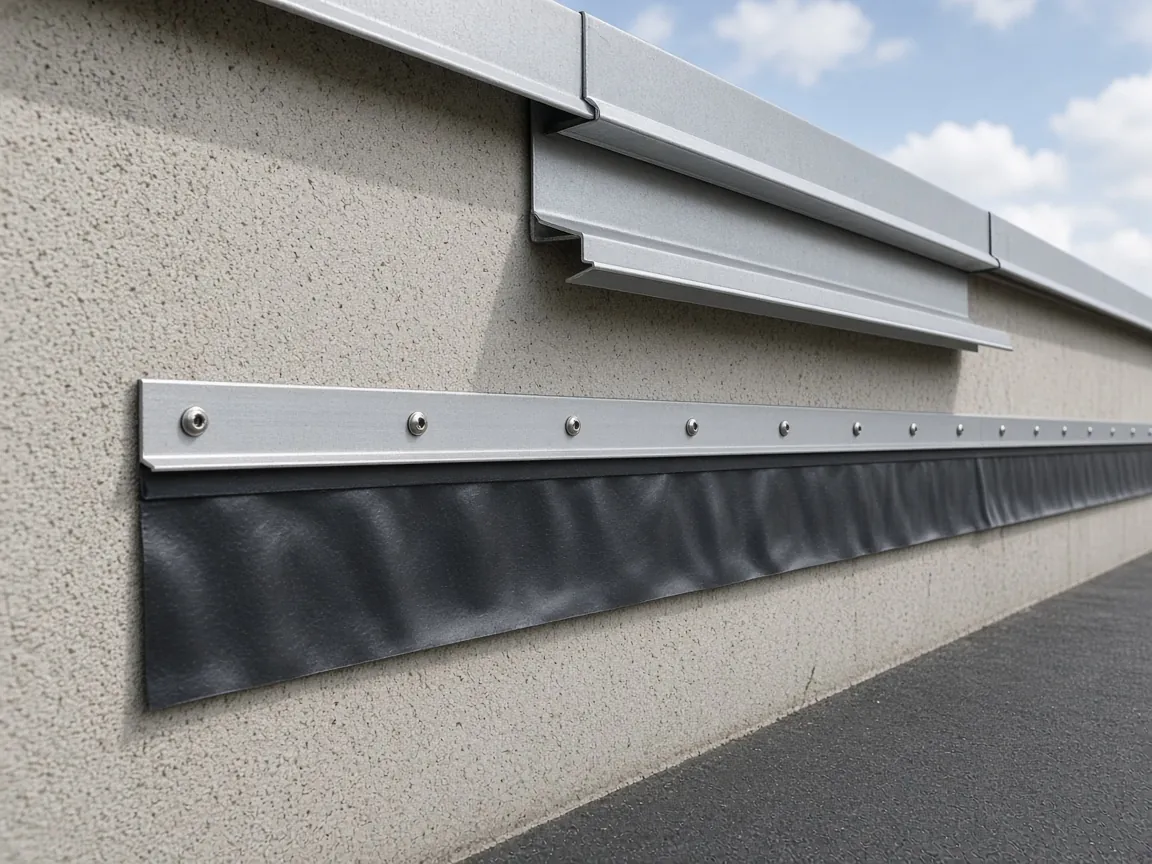
| Parapet / wall base flashing | Membrane slides or debonds, termination bar loosens, sealant dries | Re-secure or replace flashing ply, new termination bar and counter-flashing |
| Coping and edge metal | Joints open, cleats fail in wind | Re-seat metal, cover joints, replace damaged sections |
| Pipe boots | Rubber cracks with UV, clamps loosen | New prefabricated boot with compatible membrane |
| Pitch pans / sealant pockets | Fill shrinks and cracks | Refill or replace with prefabricated flashing |
| HVAC curbs and skylights | Corners split, counter-flashing gaps | New curb flashing with reinforced corners |
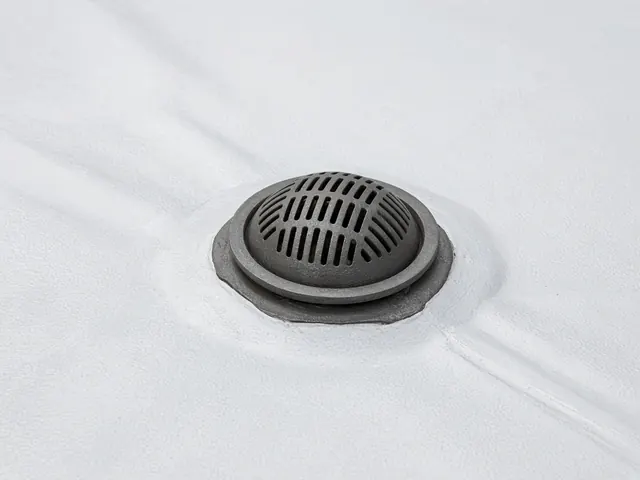
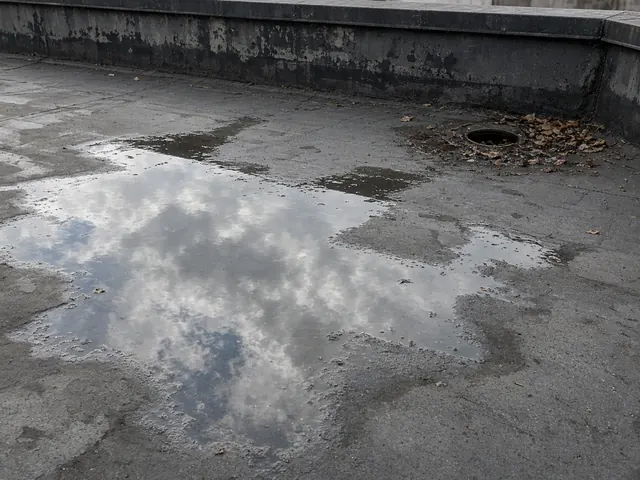
| Drains and scuppers | Clamping ring loose, membrane torn at bowl | Reset clamping ring, new target patch, replace insert |
Costs
HomeGuide puts flashing repair at about $200–$500, and replacing and resealing all flashing at about $400–$1,000 on a typical residential roof. Commercial parapet rebuilds and drain repairs can cost considerably more.
About our numbers: price ranges on this site are national planning figures drawn from published 2025–2026 cost guides (mainly HomeGuide) and trade sources, rounded for readability. They are illustrative, not quotes. Local labor rates, access, roof height, insulation condition and permit rules can move a real price well outside them.
Frequently asked questions
How often should flashings be checked?
At least twice a year, spring and fall, and after major storms. Sealant-dependent details like pitch pans need the most attention.