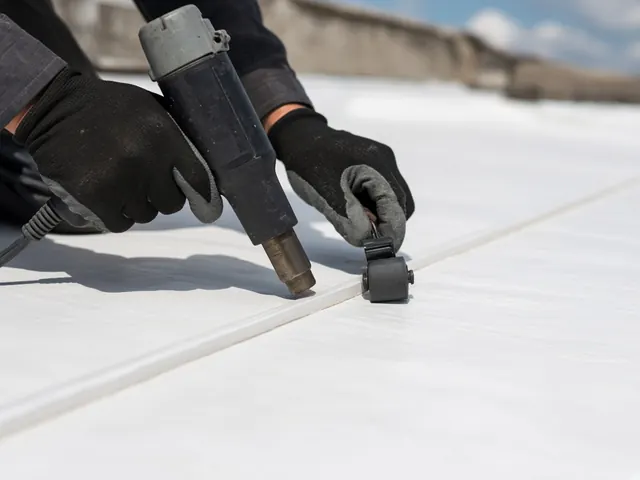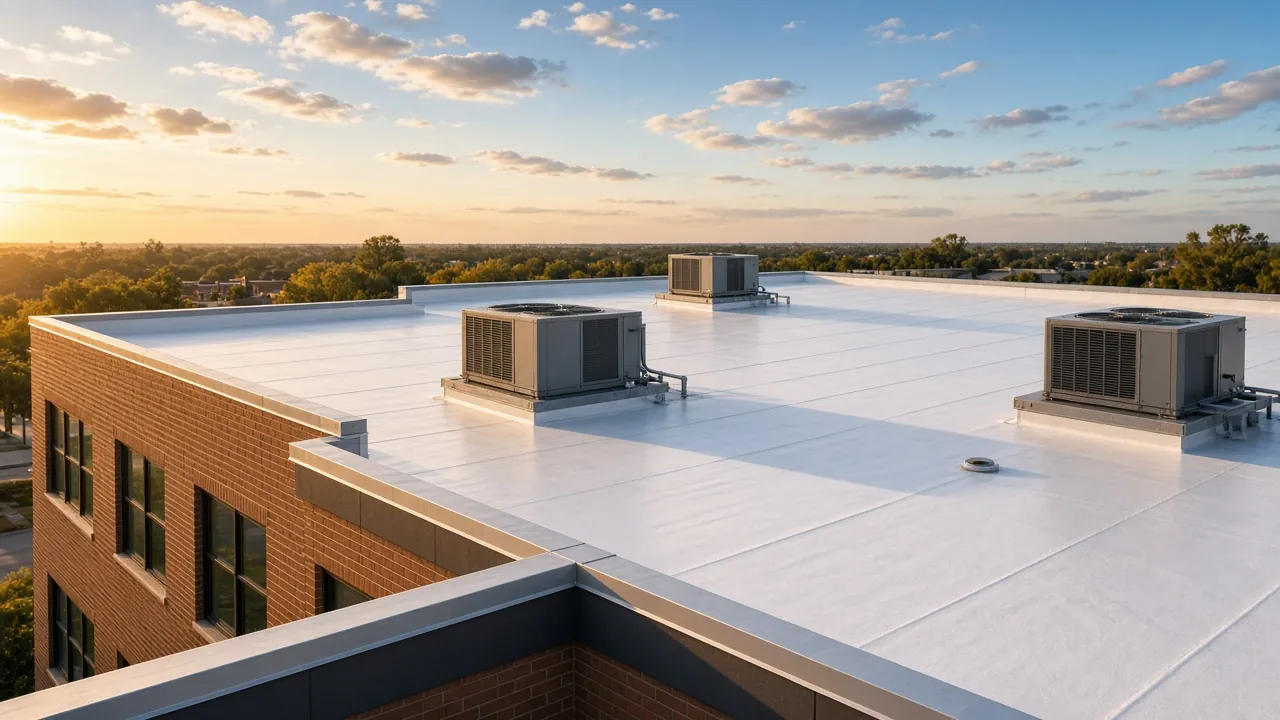
Thermoplastic polyolefin (TPO) is a single-ply membrane, usually white, that has become one of the most common commercial and residential low-slope roofs in the US. Its seams are joined with hot air, which melts the two sheets together. That makes repairs straightforward for a trained technician with the right welder.
Common TPO problems
- Seam failures, often from cold-weather or rushed installation, or from a worn welder.
- Punctures from foot traffic, dropped tools, hail and rooftop equipment work.
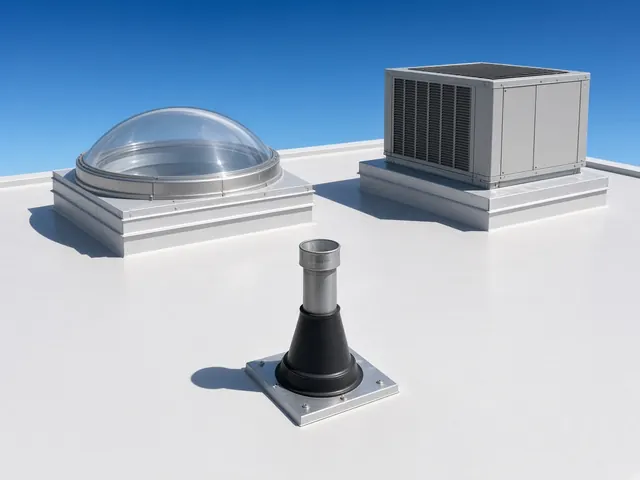
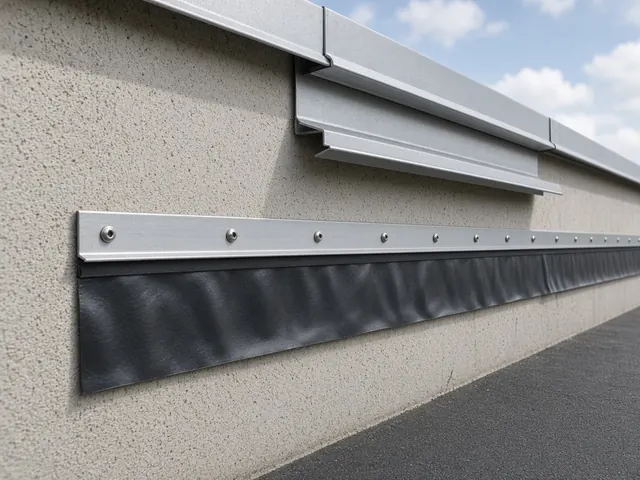
- Flashing failures at curbs, walls and pipes where the membrane is stressed.
- Surface cracking and chalking on older or thinner membranes.
- Shrinkage pulling at edges and corners on some aging sheets.
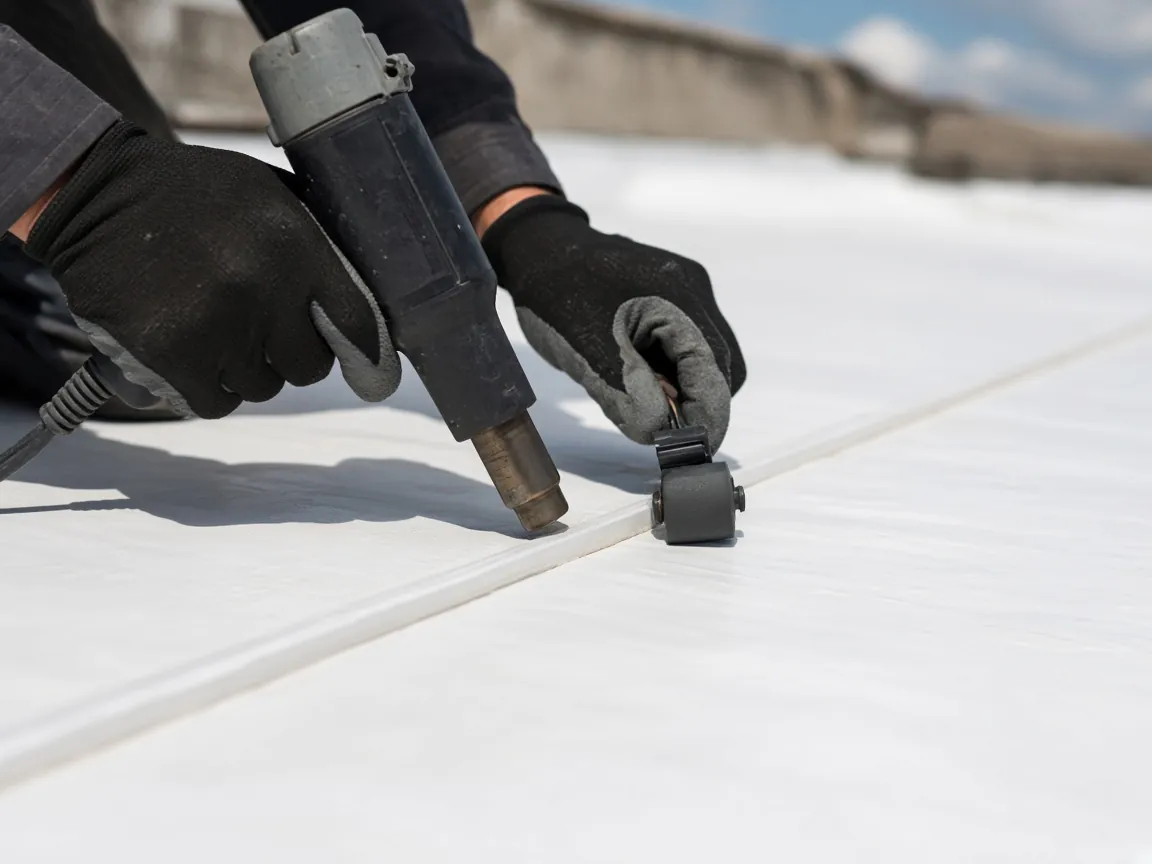
How a proper TPO repair is done
- Clean the area. TPO oxidizes; weathered membrane often needs a manufacturer-approved cleaner or prep before it will weld.
- Cut a patch with rounded corners that extends well beyond the damage. Square corners lift.
- Weld the patch with hot air and a roller at the right temperature and speed for the conditions.
- Probe every inch of the weld with a seam probe to confirm a continuous bond.
- Document the repair with photos, especially if the roof has a manufacturer warranty.
If a TPO roof can't be welded because the membrane is too weathered, a cover strip with a compatible primer and tape-backed flashing may be used. A good contractor will explain which method they're using and why.
TPO repair costs
| Repair | Typical range |
|---|---|
| Small patch | $200–$500 (HomeGuide); service calls often carry a minimum |
| Seam re-weld | Priced per linear foot; trade sources commonly quote roughly $8–$25/ft |
| Curb or penetration flashing | $300–$1,500 depending on detail |
About our numbers: price ranges on this site are national planning figures drawn from published 2025–2026 cost guides (mainly HomeGuide) and trade sources, rounded for readability. They are illustrative, not quotes. Local labor rates, access, roof height, insulation condition and permit rules can move a real price well outside them.
Frequently asked questions
Can you repair TPO with EPDM tape?
No. TPO and EPDM are chemically different. Use TPO membrane or TPO-compatible products only.
Does a repair void my TPO warranty?
It can if it isn't done by a contractor the manufacturer authorizes. Check your warranty terms before calling anyone, and ask the original installer first.