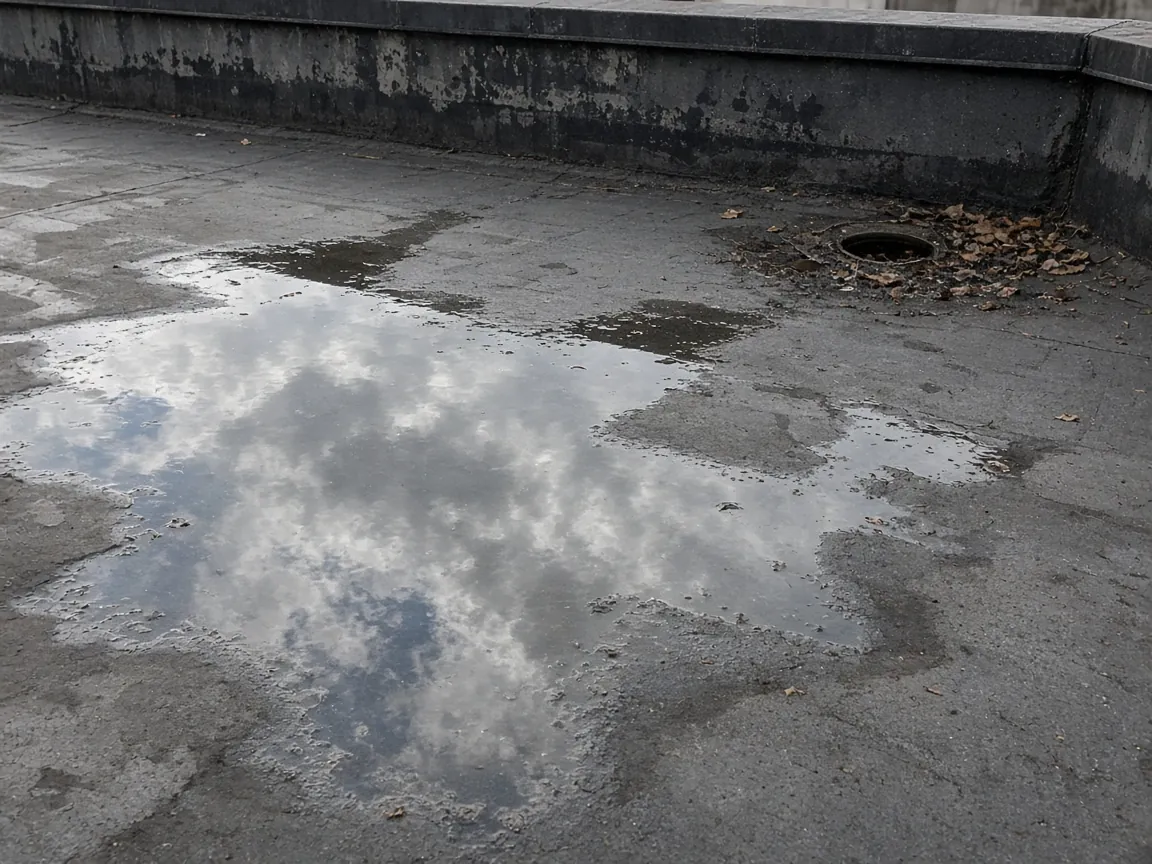
"Flat" roofs aren't meant to be flat. Building codes require a minimum slope for most low-slope coverings, commonly a quarter inch per foot, so water drains. When it doesn't, ponding follows.
The 48-hour rule of thumb
Across the industry, water that remains on a roof about 48 hours after rain (in drying conditions) is generally treated as ponding. Many membrane manufacturers exclude ponding damage from their warranties, so it's worth fixing even before it leaks.
Why ponding matters
- Weight. About 5.2 lb per sq ft for every inch of water. Ponds deepen as the deck deflects, which can turn into a progressive problem.
- Faster aging. Constant wet-dry cycles, UV magnified through water, dirt and plant growth all shorten membrane life.
- Leaks. Standing water finds every weak seam.
- Ice. In winter, ponds freeze and stress the membrane and drains.
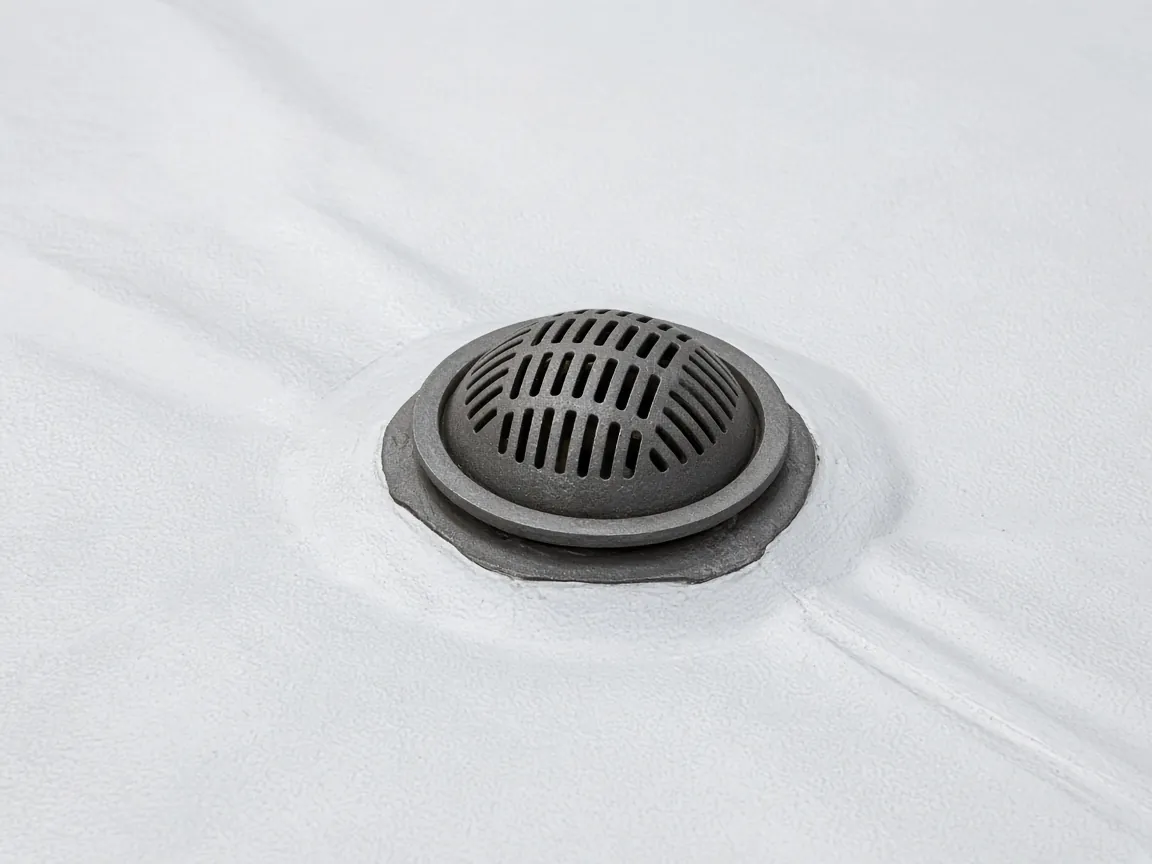
Fixes, cheapest first
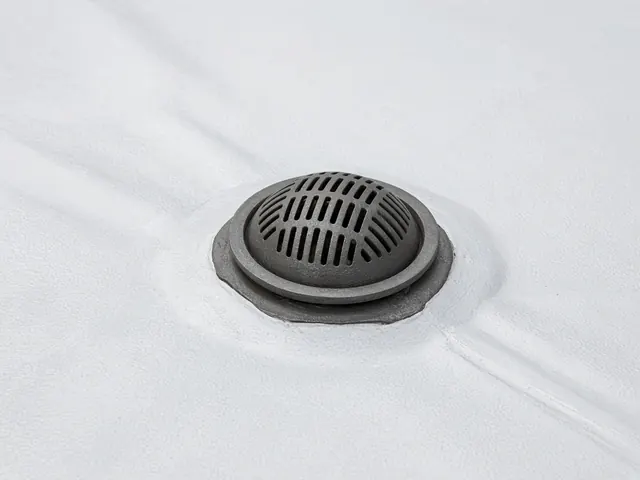
- Clear drains, scuppers and gutters. Leaves, gravel and debris cause a large share of ponding.
- Re-set or lower drains that sit higher than the surrounding roof.
- Add crickets and saddles to divert water around curbs and toward drains.
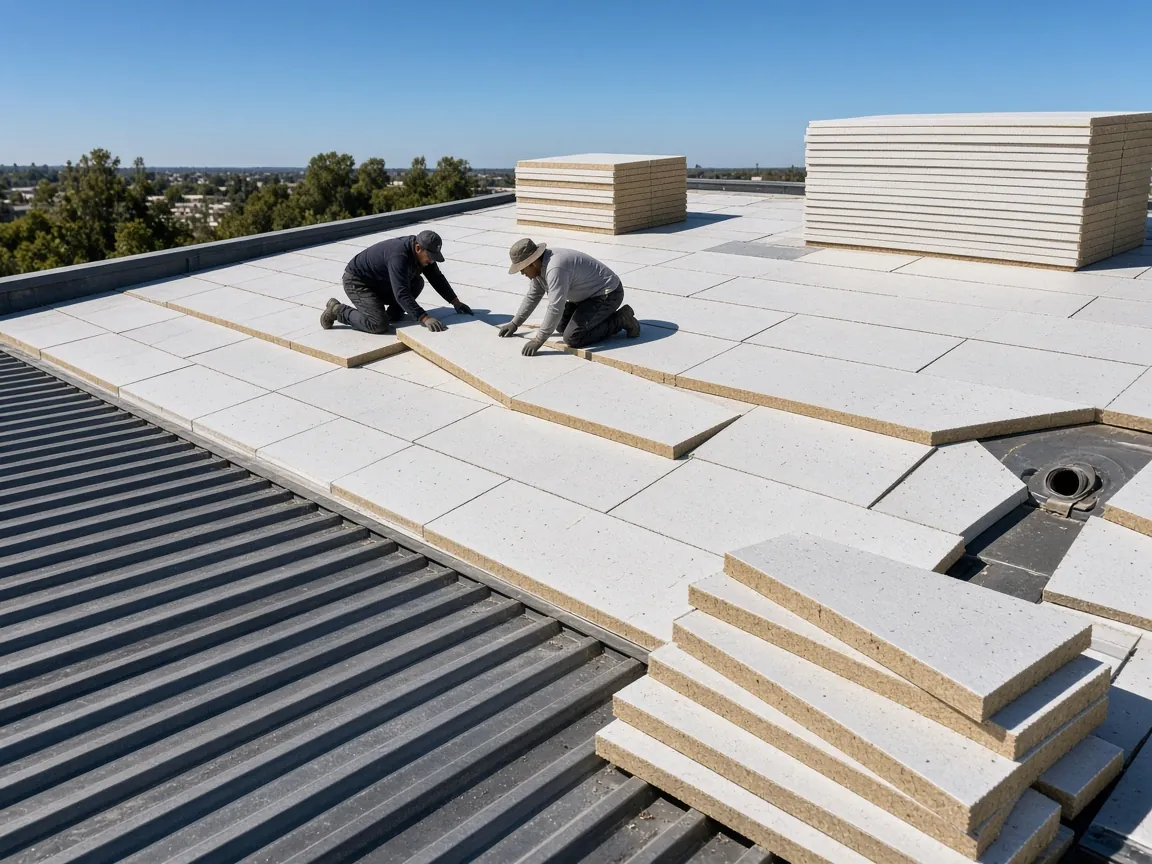
- Install tapered insulation during a recover or replacement to build in positive slope.
- Add drains or scuppers where the roof simply has too few outlets.
- Repair the structure where a sagging deck or joist is the real cause.
About our numbers: price ranges on this site are national planning figures drawn from published 2025–2026 cost guides (mainly HomeGuide) and trade sources, rounded for readability. They are illustrative, not quotes. Local labor rates, access, roof height, insulation condition and permit rules can move a real price well outside them.
Frequently asked questions
Is some water on a flat roof normal?
Yes, small birdbaths that evaporate within a day or two are common. Large or long-lasting ponds are not.
Can a coating fix ponding?
Some coatings, especially silicone, are rated for ponding water, but they don't remove the weight or the cause. Drainage fixes come first.