Safety first
Only go on a roof in dry, calm daylight with safe access, and stay well back from edges and skylights. If that isn't possible, work from inside and call a professional.
Inside the building
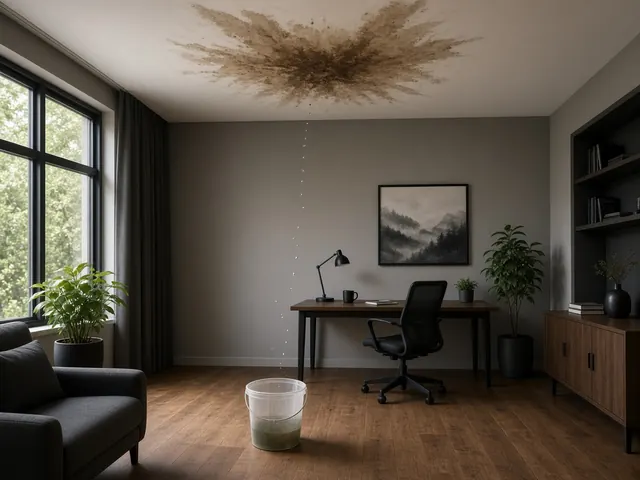
- Catch water with buckets and move valuables.
- Protect floors with plastic sheeting.
- Switch off circuits feeding wet fixtures, if safe.
- Photograph everything for the repair and any insurance claim.
On the roof (if safe)
| Roof | Reasonable temporary measure |
|---|---|
| EPDM | Clean and dry the area, apply an EPDM peel-and-stick patch or EPDM-compatible tape |
| TPO / PVC | Membrane-compatible repair tape on a clean, dry surface; avoid asphalt products |
| Modified bitumen / BUR | Roofing cement with reinforcing fabric |
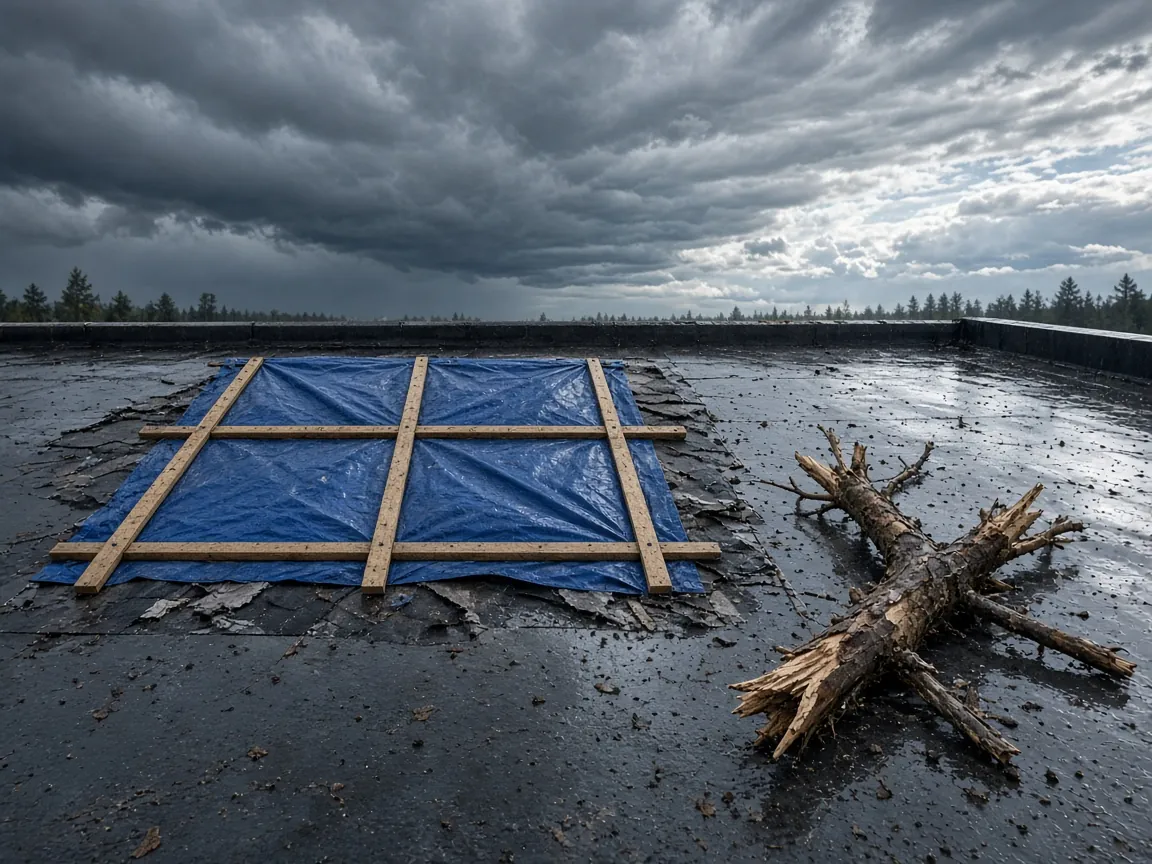
| Any roof, large damage | Tarp secured with battens and ballast, not nails through good membrane |
What to avoid
- Asphalt-based cement on TPO, PVC or EPDM: it doesn't bond and complicates the permanent repair.
- Open flame of any kind.
- Nailing tarps through intact membrane.
- Leaving the "temporary" fix in place for months.